
Trump administration prepares to keep ACA public exchange system alive in 2027
The administration of President Donald Trump is preparing to keep the Affordable Care Act public exchange system and the premium tax credit system alive next year.
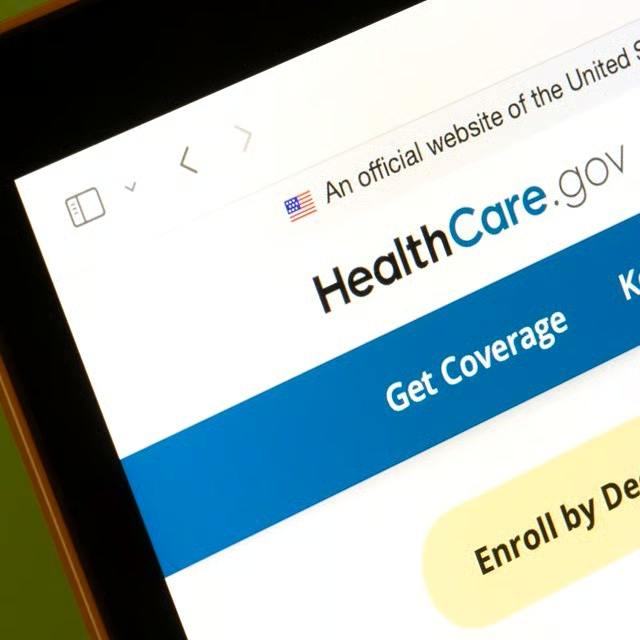
The U.S. Department of the Health and Human Services and the Centers for Medicare and Medicaid Services — the HHS agency that runs HealthCare.gov and oversees state-based exchange programs — are publishing the proposed ACA benefit and payment parameters for 2027 in the Federal Register Wednesday.
“The Trump administration remains committed to maintaining stable, competitive and affordable health insurance markets while ensuring federal programs operate with integrity and accountability,” officials said in an announcement about the filing of the 2027 parameters draft.
What it means: Some benefits advisors are now promoting use of individual coverage health reimbursement arrangements and similar arrangements. The arrangements provide employer cash that workers can use to buy their own individual coverage.
The new 2027 ACA exchange parameters draft may support the ICHRA marketing efforts, by increasing the odds that ACA exchange plans and other types individual major medical coverage will continue to be available in 2027.
ACA exchange basics: The ACA exchange programs provides government-run “online supermarkets for health insurance.” Private insurers can use the federal government’s HealthCare.gov and states’ own state-based exchange programs, such as Covered California and Connect for Health Colorado, to sell commercial coverage to U.S. consumers. Consumers can shop for coverage through the exchange programs, buy coverage without going through medical underwriting, and pay for the coverage with help from federal ACA “advanced premium tax credit” subsidies.
Eligibility rules: HHS and CMS expect to tighten application verification rules in 2027. One change could keep about 1.2 million noncitizens who do not have permanent resident status or similar status from using federal subsidies to pay for their coverage, according to HHS and CMS projections.
Officials want to give states the option of using web brokers and other entities to run their ACA exchange programs, through a “state based exchange direct enrollment option,” instead of requiring states to use a centralized, government-run organization to provide state-based ACA exchange services.
But officials are predicting that the total number of exchange system users may fall just 6.8% to 11% in 2027, to somewhere from 15.7 million to 16.5 million, from about 17.7 million this year. Officials are predicting that the number of users will stay over 15 million through at least 2030.
Plan design rules: Officials have tried to bend the ACA plan design, deductible and maximum out-of-pocket spending rules, to address the concern that moderate-income people may be paying $500 or more per month for plans that provide little coverage for anything other than basic preventive care until patients reach a deductible of $6,000 or more.
One proposal would be to let issuers offer plans with relatively low deductibles and high maximum out-of-pocket spending limits.
For workers who use exchange coverage —- because their employers do not offer affordable health benefits or because their employers offer ICHRA plans — using low-deductible, high-limit coverage could make getting everyday care easier. But use of those plans could increase collections problems for health care providers that frequently treat patients for heart attacks, cancer and other costly conditions.
ICHRAs: Officials mention ICHRAs only in passing parameters draft.
One reference occurs in a question about how the government can help people who “churn in and out of the individual market” through the use of ICHRA plans can maintain continuous coverage for two or more years.
Another is in a request for comments about how proposed changes in coverage parameters might interaction with ICHRA and health savings account features.
Comments are due March 11.