
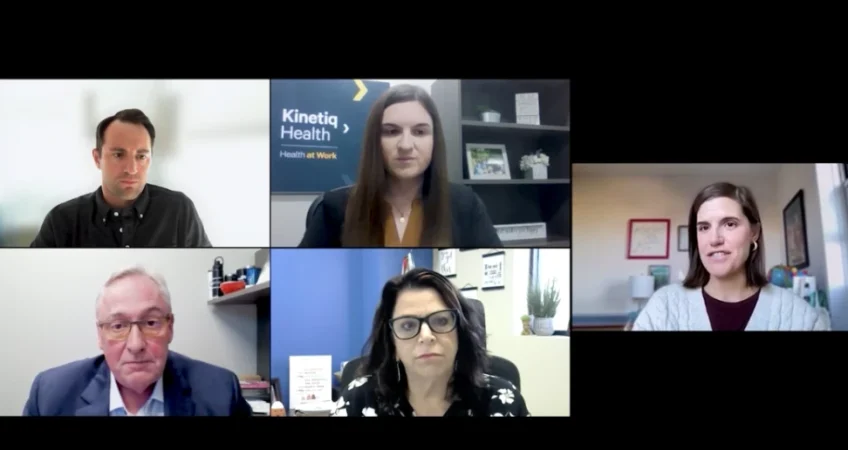
Double-digit healthcare costs are here: 5 strategies for benefit managers to regain control
- Key Insight: Discover how aggregating clinical and vendor data lets employers steer care and reduce costs.
- Expert Quote: “Benefits now influence hiring as much as salary,” says David Murtagh, VP Product, Claritev.
- Supporting Data: Baseline renewals add 7–10% annual health-plan cost increases if employers make no changes.
- Source: Bullets generated by AI with editorial review
Double-digit health care cost increases are no longer a future concern — they’re a present-day reality for employers of all sizes.
Across the board, benefit leaders are grappling with the same tension: How do you control runaway costs without sacrificing employee health outcomes, engagement, or trust? In this Leader’s conversation, executives and HR pros share that doing nothing isn’t really an option anymore. In fact, a “status quo” renewal now all but guarantees another 7–10% increase, before factoring in new therapies, rising utilization, and employee expectations that benefits keep pace with the modern workforce.
“As much as ever, you’ve got competition for employees and that goes beyond salaries — it definitely includes benefits,” says David Murtagh, VP product at Claritev. “You’ve got a lot of emerging point solutions that I think as people get more exposed to, they become expectations for future employers.”
“I’ve been working in HR for about 30 years and there’s been such an evolution in the providers that are available and then the laws that have been passed that have really put more of a responsibility on the employers,” says Stephanie Koch, director of human resources at Hendry Marine Industries. “I think it’s very important for HR professionals to really be empowered to understand healthcare strategy as well as they understand employee relations and performance evaluations.”
These leaders touched on one theme consistently: Employers that are getting ahead of costs are doing so by intervening earlier, steering care more intentionally, and reclaiming ownership of their data and decision-making.
Here are some key areas where benefit leaders can focus their efforts — and what concrete steps they can take next.
1. “Do nothing” is the most expensive strategy
Several panelists emphasized that annual health plan increases of 7-10% are essentially the baseline if employers change nothing. But layered on top of that are competitive labor pressures, growing expectations for richer benefits, and the steady addition of new — often costly — clinical innovations. Left unmanaged, these incremental costs compound quickly.
“I think employees want more and they want it for less,” says Sarah Michaels, chief clinical officer at Kinetiq Health. “We are facing increasing premiums, but we’re also facing increasing deductible levels out-of-pocket maximum.”
Action item for benefit managers: Treat renewal season as a strategic checkpoint, not a rubber stamp. Before accepting trend assumptions, identify your top three cost drivers from the prior year (by condition, service, or site of care) and require your broker or consultant to present at least two targeted strategies to address each one.
2. Cost control starts with data — but data alone isn’t enough
The group repeatedly returned to the idea that employers can’t manage what they can’t see. Claims, pharmacy, wellness, and point-solution data often live in silos, making it difficult to identify true cost drivers or care gaps. Even when data is available, healthcare interpreting it correctly requires expertise.
Action item for benefit managers: Push for data aggregation across medical, pharmacy, and key vendors — whether through an analytics platform or coordinated reporting. Just as importantly, secure clinical or advisory support to help translate insights into decisions, rather than expecting HR teams to “figure it out” on their own.
“The number of data sources and data points to try to figure out and get your hands around those costs are also increasing tremendously,” Murtagh says. “That’s just not reasonable to expect most benefits managers or even benefits teams to effectively oversee. So to me, at its core, the starting point of this is a data aggregation challenge that you have to start with before you can do anything about the cost challenge.”
3. Delayed care is fueling catastrophic claims
Rising deductibles and out-of-pocket costs are leading employees to delay care — sometimes until conditions become catastrophic. Clinicians on the panel highlighted that many high-cost claimants hadn’t seen a doctor in the two years leading up to their diagnosis, a pattern that drives both worse outcomes and higher spend.
“People are not getting care until they’re really sick because they fear the cost of care,” Michaels says. “People cannot afford the cost of care today.”
Action item for benefit managers: Make primary care access as frictionless as possible. Whether through onsite or near-site clinics, telehealth, waived cost-sharing, or incentives tied to preventive visits, prioritize getting employees connected to a primary care provider early and consistently.
Read more: 2026 healthcare trends: How access to better data can redefine benefits
4. Where care happens matters as much as what care is delivered
From musculoskeletal procedures to oncology infusions, the panel underscored enormous price variation across hospitals, outpatient centers, and home-based settings — often with no difference in quality. Left unguided, employees tend to follow referrals within large health systems, unknowingly triggering higher costs.
Action item for benefit managers: Use claims data to identify high-cost services and compare prices by site of care. Then build plan incentives, direct contracts, or navigation programs that steer employees toward high-quality, lower-cost providers — especially for imaging, infusions, and surgical procedures.
“I think by taking in the data and identifying specific diagnostic codes, you can start comparing all of the hospital systems in your area about what they’re charging for specific procedures,” says Stan Jackson, chief innovation officer at Apex Benefits. “There’s a huge price variation in this marketplace. And so from that, we started creating programs and went to the highest quality lower cost providers in town and went and made direct deals with them to help steer people over to their systems whenever people needed care.”
5. A small number of members drive a disproportionate share of spend
One of the most striking insights shared was that a tiny percentage of plan members — often fewer than five individuals — can account for the majority of total plan costs. Treating all claims as inevitable misses the opportunity to intervene where it matters most.
Action item for benefit managers: Adopt a targeted intervention mindset. Work with clinical partners to identify current and emerging high-cost claimants and deploy personalized outreach, care coordination, and second-opinion pathways designed to improve outcomes while mitigating future costs.
“You’re starting to see who has a diagnosis and should be on medication but has not filled that medication for several months. No surprise, those are going to be your individuals that land in a hospital and become your hundred-thousand dollar claimant,” Michaels says. “And so we use predictive analytics both ways: Not only who are your largest claimants today, but who are going to be your largest cost claimants if an intervention is not done.”